A modern name on a thin old sentence
Ostara
Ostara, as a spring-equinox sabbat, is a modern revival name. Bede mentions a goddess Eostre once. The evidence is thin. Eggs and hares are not a command to reproduce, and the equinox is astronomy before it is a mood.
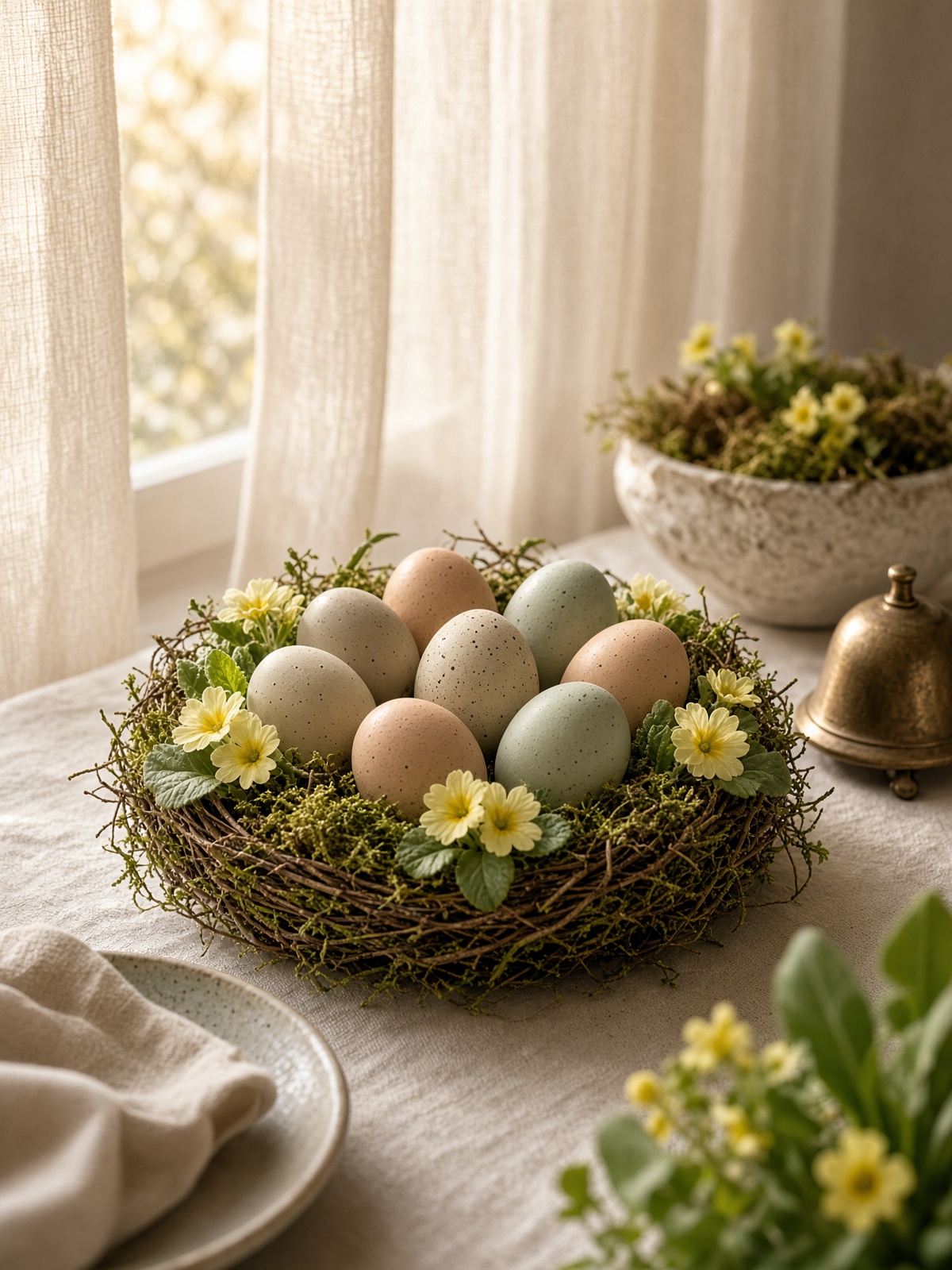
Where the feast comes from
The name Ostara needs a careful mouth. In the early eighth century Bede, in De temporum ratione, says the Anglo-Saxon month Ēosturmōnaþ was named for a goddess Ēostre, and that her feasts had fallen out of use in favor of the Paschal season. That notice is the primary early evidence. There is no surviving myth, no temple inventory, no ancient rite with her stage directions. Jacob Grimm later speculated about a Germanic dawn goddess and used a form like Ostara. Modern paganism, especially the twentieth-century Wiccan wheel, took the name for the spring equinox. The evidence for an ancient equinox goddess under that name is thin. Say it is thin. You can still enjoy a spring feast without inventing a scripture Bede did not write.
Eggs, hares, and the English word Easter have been pulled into the gap. Eggs and hares as spring images in parts of Europe are real folk history with regional, often Christian-era paths. They are not proof of a documented Eostre cult, and the etymology of Easter is a live debate that should not be settled by a meme. The equinox itself is older than any of these names in the simple sense that the sky has always crossed that balance. Many cultures keep spring rites that are not this one: Nowruz, Holi, Easter, local planting festivals. If you borrow their symbols, you are a guest, not an heir. The Wiccan Ostara is a modern liturgical day. It can be beautiful as a modern day. It is not unbroken ancient Wicca, because nothing in the eightfold wheel is.
How it is kept now
Keep Ostara, if you keep it, as the near-equality of day and night and as the work spring actually is where you live. That work might be planting. It might be mud, taxes, lambing's aftermath, allergy season, a school term, or the first day you can sit outside with a coat undone. Clean one window. Start seeds only if you have light and a plan for the plants when they outgrow the cup. Dye eggs if you like color, then eat the eggs. Do not leave hard-boiled eggs on an altar until they become a lesson in microbiology.
Do not make this feast a heterosexual fertility mandate. The equinox does not require a couple, a pregnancy, a sex rite, or a metaphor in which women are eggs and men are hares. People who cannot or do not bear children are not failing spring. Desire, if it is present and mutual, can be private and does not need a sabbat to authorize it. Creativity, planting where planting is real, cleaning, and friendship are enough. If a book tells you the goddess demands a sexual act, close the book. Consent is the only fertility charm this house recognizes, and it is not a charm. It is a condition.
North, south, and the weather you actually have
In the north, the March equinox is a plausible spring door, earlier in some valleys and still winter in others. Look at the ground. If it is still under snow, the rite is light and planning, not a performance of blossoms. If the pollen is already a disaster, honor your lungs first. A feast that ignores the body is a photograph.
In the south, the spring equinox falls around September. That is the honest Ostara if you are following seasons. March there is autumn, and a bunny pasted on an autumn window is the wrong sermon. You may still dye eggs in September; chickens do not check Bede. In the tropics and in dry-summer climates, 'spring' may not be the greening you were promised. The wet season's first rain, or the cool season's first morning, may be your real turning. Use it. You can mention the equinox as astronomy, a near-balance of day and night, without pretending the air feels like a postcard of Somerset. Balance, as a mood, is optional. Many lives are not balanced, and the sky's geometry does not scold them.
An altar that can be put away
A window you can see, a bowl of water, one living green thing you can keep alive or none at all, eggs only if they will be eaten promptly, and a cloth light enough to wash. Seeds in a packet are a better symbol than sprouts dying on a radiator. If you paint eggs, use food-safe color if the eggs will be eaten, and refrigerate them. Skip the hare skull, the forced sex symbolism, and any 'maiden' language that sorts people by sexual history. The altar can be a clean sill. It does not have to be a shop.
Put it away before the eggs go off. If you offered flowers, compost them when they fade rather than reading the fade as a spiritual verdict. Spring includes rot. That is not a curse. It is compost, which is how the next green happens, and it is also just a dead daffodil. Both readings can sit down. Wash the cloth. A sill that goes back to holding mail is a successful altar, because the equinox was noticed and then the room was returned to the people who live in it.
Solitary, and with chosen family
Alone, open a window if the air is safe, breathe, and do one clearing gesture in the room: papers, a pane of glass, the shoes by the door. Write what you are planting in the metaphorical sense only after you have written what you are planting in the practical sense, even if the practical list is 'nothing, the ground is wrong.' Eat an egg or a green or a piece of bread. Wish yourself a happy equinox without requiring a witness.
With chosen family, dye eggs, or don't, and eat a meal where no one is teased for being single, childless, queer, or uninterested in a fertility joke. A walk to look at what is actually budding, or what is actually fruiting if you are in the other hemisphere, is a better shared rite than a speech about the maiden goddess. If children are present, the theology is: day and night are about the same length, the year is turning, we eat together, you do not owe anyone a romance. Partners who want a private rite of desire may have one that is not this public teaching. This public teaching stays with the window and the plate.
The table, including if you do not cook
Greens and a finished egg are the meal: a handful of leaves you know are food, cooked, and an egg cooked through if anyone at the table needs it cooked through. It is food, not a fertility spell and not medicine. If you do not cook, bread and butter and any raw vegetable you already trust, washed, are enough. Do not forage wild greens you cannot name. The equinox does not grant plant identification.
A purchased egg salad on bread is a lawful Ostara if the egg salad has been kept cold. So is a meal with no egg at all, for people who do not eat them, and so is toast and a handful of washed greens from a bag. The symbol can retire without the feast collapsing. The people at the table still need lunch, and lunch is not improved by a speech about hares. Eat, refrigerate what remains, and let the day be ordinary again by the time the light changes.
Correspondences, labeled as such
| Northern seasonal date | The March equinox, around 20 March. A nearby weekend is fine. Exact minute of equinox is unnecessary. |
| Southern seasonal date | The September equinox, if spring is what you are marking. Do not force hare imagery onto a March autumn. |
| Historical core | A modern sabbat name from Bede's single notice of Eostre, plus Grimm's speculation. Evidence of an ancient equinox rite under that name is thin. |
| Modern theme | Near-equal day and night, local spring labor, color, a clean window. Not a reproductive mandate. |
| Table | Bread and butter is enough if you do not cook. |
An original rite
Materials. A window, or a door you can open onto the air if the air is safe · A cloth and a little water or vinegar for one pane or one corner. A dry cloth if that is all you have · A bowl or a mug of potable water to drink, not to charge, or tea if plain water feels too ceremonial · Food: the greens and egg below, or bread and butter · Optional seeds in a packet, or a piece of paper if the only thing you are planting is a plan. No pressure to garden
- 1Stand at the window in the daylight. You do not need the astronomical second. Say whether day and night are nearly equal, and whether the season outside matches the word spring. Honesty first.
- 2Clean one pane, one corner, or the sill. This is the whole symbolic labor. Speak the words of the rite while you do it or after.
- 3If you have seeds and a real plan for soil and light, sow them with ordinary gardening sense. If you do not, write one spring task that fits your actual climate, or write 'no planting' and let that stand.
- 4Cook and eat, or simply eat the bread. If there is an egg, cook it. Refrigerate leftovers promptly. The rite is not a reason to get food poisoning.
- 5If anyone in the house has been told they are a failed spring because of their body, their orientation, or their solitude, the correction is spoken: this feast does not require a child, a husband, a wife, or a heat. Desire is private when it exists, and absence of desire is not a wound.
- 6Pour yourself water and drink it because it is water. Do not leave an extra 'offering egg' in the sun.
- 7Put the cloth to the laundry, compost scraps that can be composted, and leave the window able to be a window. Open or shut it for the comfort of the room, not for a spirit.
Day and night are nearly of a length. I will not pretend the weather is a myth. No body here is a symbol to be used. Spring, if it is spring, can come in through a clean pane.
Close. Say the equinox hour, exact or approximate, is released. The room is a room. Wash your hands. Any egg left over is lunch tomorrow, not an amulet.
A practical action. This week, do the practical spring task your climate actually asks: the filter, the fan, the planting, the clearing of a drain before rain, or nothing but a walk. Skip what the British poem demands and the street does not.
A table
- 1 large handful of spinach, cabbage, or another leafy green you recognize as food, washed, or 1 cup frozen greens
- 1 teaspoon oil or butter
- A pinch of salt
- 1 egg
- 1 slice of bread
- A few drops of lemon juice or vinegar, or a grind of black pepper
Method
- 1Warm the oil or butter in a small pan. Add the greens and the salt. Cook until wilted and hot. Frozen greens must be steaming and heated through.
- 2Push the greens aside. Break in the egg. Cook until the white is set. If you are pregnant, elderly, very young, or immunocompromised, cook the yolk through as well.
- 3Toast the bread. Add the lemon, vinegar, or pepper.
- 4Eat at once. If you do not cook, bread and butter and a washed raw vegetable you already trust are enough. Refrigerate any leftover cooked egg and eat it within a day.
Questions
- Can you tell Bede's one sentence about Eostre apart from the modern sabbat built on top of it?
- What is the ground outside actually doing, regardless of the word Ostara?
- Where has a fertility metaphor been used to leave someone out, and what sentence would bring them back to the table?
Sources and further reading
- Project Gutenberg, for public-domain Bede, including the Ecclesiastical History. The Eostre passage itself is in De temporum ratione, chapter 15, not in the History. Read the thinness of the evidence as part of the point.
- A direct public-domain edition of Bede's Ecclesiastical History, useful context for who Bede was and was not: a monk explaining calendars and the English church, not a field anthropologist of a living pagan equinox cult.
- Encyclopaedia Britannica, modern Paganism, where Ostara names the spring-equinox sabbat of the contemporary wheel.