The first thin return
Waxing Crescent
The waxing crescent is the first visible slice of returning light. The work is not a new beginning. It is tending the living task you already named.
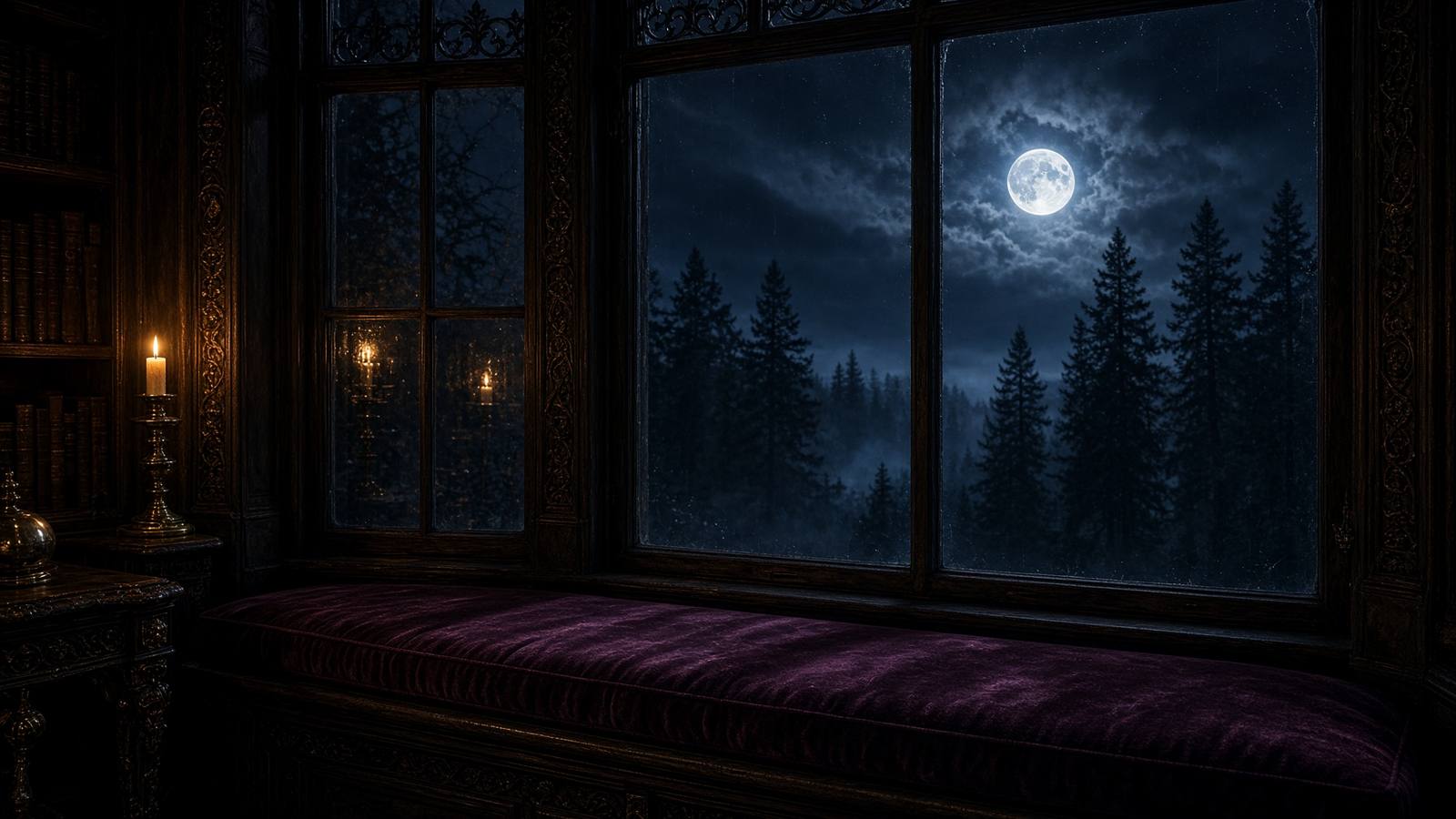
What you are looking at
A waxing crescent is the Moon a few days after new, a bright edge on the western evening sky, the rest of the disc sometimes faintly visible in earthshine. It sets not long after the Sun. If you work late or the cloud sits down on the roof, you may miss it entirely and still be inside the crescent days. Check a calendar if you want the date. Do not build a theology out of whether you personally saw the horn of light. Cities hide moons. Smoke hides moons. Bedtime hides moons. The phase is a stretch of several evenings, not a single glamorous minute.
This is the phase for return, not for invention. The new moon asked for a seed on paper. The crescent asks whether that seed is still alive, and for one period of ordinary care. If you planted nothing, you may choose a task that is already in motion: a plant that exists, a course already started, a friendship that needs a message, a room that needs twenty minutes. Do not use the crescent as permission to open five new projects because the sky looks hopeful. Hope is not a staffing plan.
Tending, specifically
Tending means a repeated, slightly boring kindness. Water the pot. Answer the email you already know how to answer. Read the next page. Stir the soup. Walk the ten minutes you said you would walk. The crescent is thin because the work is thin. A rite that requires a new altar cloth, a shopping trip, and a personality change has mistaken commerce for care. If the task is a relationship, tending is not surveillance and not a spell to make someone reply. Send the honest message, or wait the amount of time you already agreed was fair. Other people are not your garden.
Some seeds fail quickly, and that is information. If you look at the paper from the new moon and feel dread rather than interest, you may compost it now. Write one sentence about why. Then either rest or choose a smaller living task that already has roots. Quitting a bad plan early is a form of tending your actual life. So is admitting that money, pain, or another person's choices have narrowed what 'progress' can mean this week. The crescent does not grade you. It only offers a shape: a little light, then more, if nothing blocks the view.
A short return, repeated
Give the task a bounded time. Twenty minutes counts. An hour counts. What does not count is a vague promise to 'be better' with no hour attached. Set a timer if timers help you stop, not only start. At the end, note one fact: what changed, what did not, what the task needs next. Keep the note dull. 'Watered the basil; it is still small' is a better crescent record than a paragraph of self-judgment.
If you are a shift worker, tend the task on the day you are awake, and let the evening crescent happen without you. If you are a renter with no yard, a jar of herbs, a sentence, or a cleaned sink is a living task. If the week falls apart, begin again at the quarter or at the next crescent. Skipping is not a curse. It is weather moving through a calendar. Nothing you do at this phase binds another person's will.
Correspondences, labeled as such
| Sky, loosely | A thin evening crescent in the west, for several nights. Missing it because of cloud or work is not a failed phase. |
| Human use | Tend one living task already begun. Do not open a second project to avoid the first. |
| Color, if you want one | A pale edge: white thread, a scrap of silver paper, or no color at all. |
| Household ally | A timer, a watering can, or the tool the task actually requires. |
| What it is not | Not a fresh start, and not a spell aimed at another person's behavior. |
An original rite
Materials. The new-moon paper, or a fresh scrap if that paper is gone, or a note on your phone · The actual tool of the task: a watering jug, a broom, a keyboard, a dish soap bottle, or your own two hands · A timer, or a clock you can see, or a song of known length if you have no timer · A candle or tea light, or the ordinary room light if flame is not allowed · A drink of already potable water, or tea, set aside so the work does not become an excuse to ignore thirst
- 1Read the seed you wrote, if you still have it. Name the living task in one sentence. If the seed is dead, say so, compost it in words, and choose one smaller task that already exists.
- 2Set a time you can truly give: twenty minutes, or an hour if the task needs it and you have it. Tell anyone who shares the space that you are busy for that long, if telling them keeps the peace.
- 3Light the candle only if it is safe, or simply turn to the work under the light you have. Speak the words of the rite once, then stop talking to the sky and start the task.
- 4Do the care. Water, write, mend, scrub, practice, send the message that asks for nothing covert. When you notice yourself adding a second project, return to the first.
- 5Stop when the time ends, even if the task is unfinished. Tending is repetition, not a single heroic completion.
- 6On the paper, write one dull fact about what changed and one fact about what the task needs next. Drink the water.
- 7Put tools away so the room can be lived in. If you share a kitchen or a desk, leave it kinder than you found it.
I come back to what I already began. I give this hour and not a new life. What is alive gets water. What is dead I will not pretend to grow.
Close. Blow out the candle if you lit one, or leave the lamp as the household needs it. Say that the tending is paused, not abandoned, and that the rite is closed.
A practical action. Put the next tending on an actual day this week. If you cannot, write down what is in the way, in plain language, and ask for help where help exists.
Questions
- Which task is already alive, and which new idea is only a way of avoiding it?
- What does twenty honest minutes change, and what does it refuse to change?
- Where are you treating another person as a project to be grown?
Sources and further reading
- Encyclopaedia Britannica, for the Moon as an astronomical body. Phase names in ritual are a human calendar laid over that geometry, not a claim of observatory precision.
- NASA eclipse resources. Included so sky-work stays physical: the Moon's light is reflected sunlight, and ritual timing does not require a minute-by-minute ephemeris.