Herb cabinet
Peppermint
Mentha × piperita. A symbolic and practical entry, not a medical monograph.
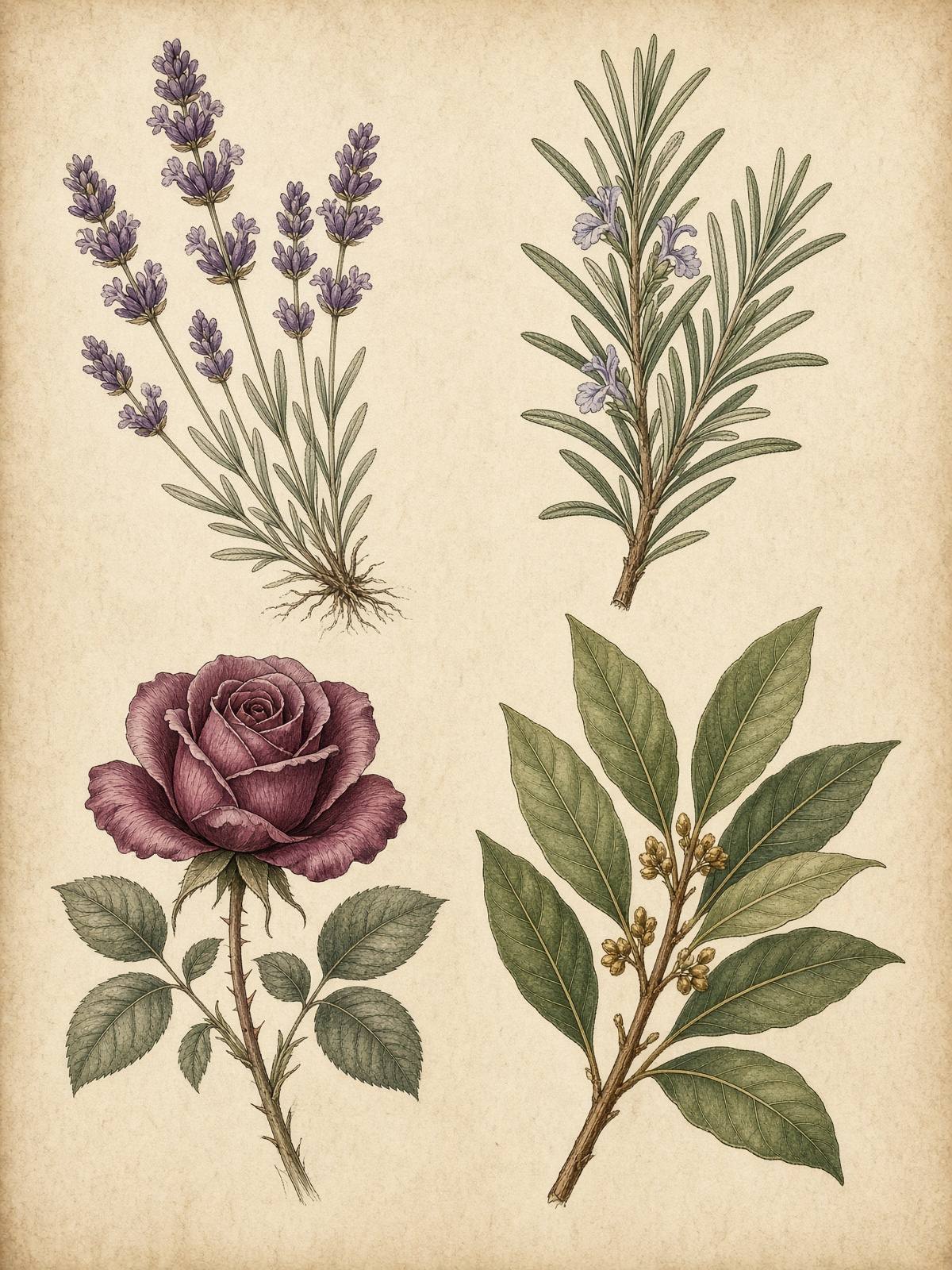
Peppermint spreads by runners, with square reddish stems and opposite, pointed, toothed leaves that are often darker than spearmint. Crushed leaves smell sweet and then sharply cooling, higher and hotter than garden mint. Pale lilac flowers come in summer spikes. This description is not a sufficient identification key.
Names
| Common name | Peppermint |
| Botanical name | Mentha × piperita |
| Family | Lamiaceae |
| Also called | brandy mint, balm mint |
| Uncertainty | Moderate. Peppermint is a hybrid of watermint and spearmint, and commercial kinds such as black peppermint differ. A minty smell does not prove which one you have. Spearmint has its own page. |
| Habitat and source | The hybrid arose in cultivation in Europe and now grows in damp garden ground and, where it escapes, along ditches. It prefers moisture and will travel if the bed allows it. |
Symbolic correspondences
| Tag | Attribution |
|---|---|
| Element | Fire |
| Planet | Mercury |
| Themes | a clear sentence · cool after heat · the letter sent · kitchen scale |
Folklore and history
Older English speech often said mint and meant several plants. Peppermint, as a recognized hybrid, comes into English botanical notice by the end of the seventeenth century and then into the cordial and confection trade. Culpeper's Venus assignment belongs to the garden mints of his day; this page gives the sharper hybrid to Mercury and to Fire, and says that this is a library correspondence, not a line you can quote from 1653. Grieve treats peppermint as a major aromatic of pharmacy and kitchen.
The legend to drop is that the oil is just a stronger cup of tea, safe on a child's skin or in a pet's room because the leaf is harmless in a sauce. Leaf and oil are different magnitudes. The leaf can flavor water or food. The oil can burn and does not belong near animals. Nothing in the trade history makes peppermint a medicine on this altar. The working is a delayed message you finally write, with a sprig in cold water as a prompt, not as a cure.
Safety
Ritual applications
- A leaf in cold water while a delayed message is written
- A pot pinched back so the hybrid stays where you put it
- A sentence sent, not perfected forever in drafts
An original working
The Cool Letter
To write and send one clear message you have been delaying, without using the plant as a drug or the message as a trap.
Timing: Daytime, when the recipient can receive a message without you staging a crisis.
- Material: A peppermint sprig from a known pot or a labeled grocery bunch
- Material: A glass of cold water
- Material: Paper or the device you will actually send from
- Material: A pen if you are on paper
- Material: A clock
- 1Put one sprig in the cold water. Do not add essential oil to the glass, the skin, or the air.
- 2Write the message in plain sentences. Remove any line that tries to make the other person feel guilty for answering, or for not answering.
- 3Read the words of the working, then read the message aloud once.
- 4Cut what is clever but untrue. Stop when a stranger could understand what you are asking or offering.
- 5Send it, or put it where you will send it before the day ends. Do not keep it as a talisman of almost-honesty.
- 6Compost the sprig and wash the glass. If the plant is escaping its pot, pinch a runner.
I say the thing in words a person can answer. Cool water is not a potion, and this letter is not a leash. Sent is better than perfect and unsent.
Close. Compost the culinary sprig. Cap any peppermint oil you own and keep it away from pets and children; it is not a tool of this rite.
A practical action. Send the message before sleep, and then leave the person room to reply when they can.
Substitutions
- Spearmint in the glass, if peppermint is too sharp and you still want a culinary leaf
- Plain cold water, if you have no unsprayed mint and the letter is the real work
Growing and sourcing
Grow peppermint in a pot; runners ignore good intentions and will take a damp bed. It is a hybrid often spread by cuttings rather than by reliable seed, so a neighbor's mint may not be this plant.
Beginner questions
- Is peppermint the same page as mint? No. Peppermint is the hybrid Mentha × piperita; the mint page is spearmint.
- May I rub the oil on a child's chest? No. The oil can burn and is not a medicine here, and it is a bad idea around pets.
- Did Culpeper list this hybrid under Venus? He assigned the garden mints to Venus. This sharper hybrid is given to Mercury on this page as a modern distinction.