Herb cabinet
Lilac
Syringa vulgaris. A symbolic and practical entry, not a medical monograph.
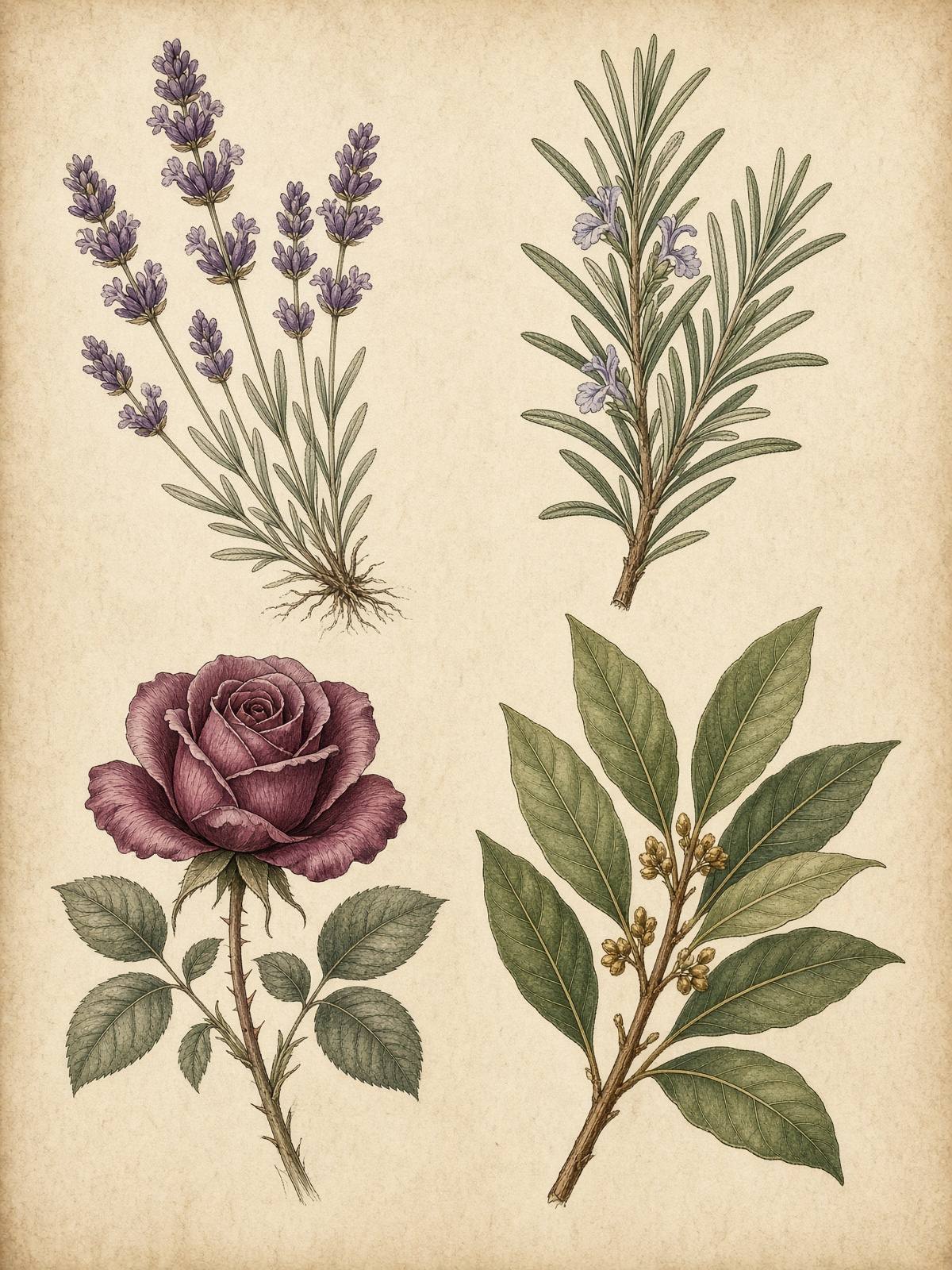
Common lilac is a multi-stemmed shrub or small tree with heart-shaped leaves in opposite pairs and, in spring, dense conical clusters of small four-lobed flowers in purple, white, or pink. The fragrance is heavy and brief. Old trunks are gray and slightly furrowed, and the shrub suckers from the base. This description is not a sufficient identification key.
Names
| Common name | Lilac |
| Botanical name | Syringa vulgaris |
| Family | Oleaceae |
| Also called | common lilac, pipe-tree |
| Uncertainty | Moderate. Mock orange (Philadelphus) is a different shrub with a similar cloud of scent, and California lilac is Ceanothus, another plant entirely. Cultivars of Syringa vulgaris are many. |
| Habitat and source | Syringa vulgaris comes from rocky hills of southeastern Europe and has been planted in temperate gardens for centuries, often outliving the house. It blooms most faithfully where winters are cold enough to chill the buds. |
Symbolic correspondences
| Tag | Attribution |
|---|---|
| Element | Air |
| Planet | Venus |
| Themes | a short season · open window · first warmth · beauty that leaves |
Folklore and history
Lilac traveled into western European gardens from Ottoman lands in the sixteenth century and became a dooryard shrub rather than a classic apothecary simple. Culpeper's herbal is not its home text. Victorian flower-books later assigned meanings, including early love, but those codebooks contradict one another and were parlor games as much as tradition. Grieve has little to do with this flower. The documented story is horticultural: a beloved bush, a short bloom, a scent that fills a room and then is gone.
The legend that lilac flowers are a harmless snack, or that the scent lays a ghost, is not one this library will underwrite. We do not recommend eating lilac. We also do not recommend promising that a bouquet reconciles the dead. What the cut branch can honestly do is mark a week in which you open the window after a long indoor season, whether that season was winter or grief. Queer springs count. The bush does not ask who you love before it flowers.
Safety
Ritual applications
- A short-lived bouquet as a marker of a season opening
- A single cluster on an altar for someone you welcome back into the room
- A fallen floret pressed only as a memory, not as a potion
An original working
The Open Window
To mark the end of a closed-in stretch of time by welcoming air and color, without claiming the flowers heal grief.
Timing: When lilacs are actually in bloom, or on the day you bring cut stems home. The working fails honestly out of season if you refuse plastic substitutes, and that is all right.
- Material: A small bunch of lilac from your own bush or from a florist stem you will not eat
- Material: A vase of water
- Material: A window that opens
- Material: A cloth
- Material: A note card
- 1Open the window before you arrange anything. Let the room air for a few minutes.
- 2Set the stems in water. Do not strip them into a tea, a sugar, or a tincture.
- 3Write on the card one sentence about what you are willing to let back in: light, a friend, a plan, music.
- 4Read the words toward the open window, not as a summons to a person who has not agreed to come.
- 5Put the card under the vase. Leave the flowers for their natural few days.
- 6When they brown, compost the plant material and pour the vase water on soil, not into a pet's bowl.
The bloom is brief, and so is this shut-in weather. I open the window without owing anyone my story. What returns may return; I will not drag it.
Close. Compost spent flowers. Wash the vase so no stem slime remains for an animal to drink. Do not save petals for food.
A practical action. Leave the window routine in place for three days: a few minutes of outdoor air, even when the flowers are gone.
Substitutions
- A branch of any unsprayed flowering shrub you already grow, used the same way and still not eaten
- An open window and a purple cloth, if lilac makes you sad or ill
Growing and sourcing
Plant common lilac in sun, give it room to sucker, and expect the best flowering where winter chill is real. Do not eat the blossoms because a neighbor does; this page still says not to.
Beginner questions
- Should I make lilac tea or syrup from this page? No. This library does not recommend eating lilac.
- Is mock orange the same plant? No. Philadelphus can smell similar and is a different shrub.
- Are Victorian flower-meanings binding? No. Those books disagree, and they are not scripture.