Herb cabinet
Ivy
Hedera helix. A symbolic and practical entry, not a medical monograph.
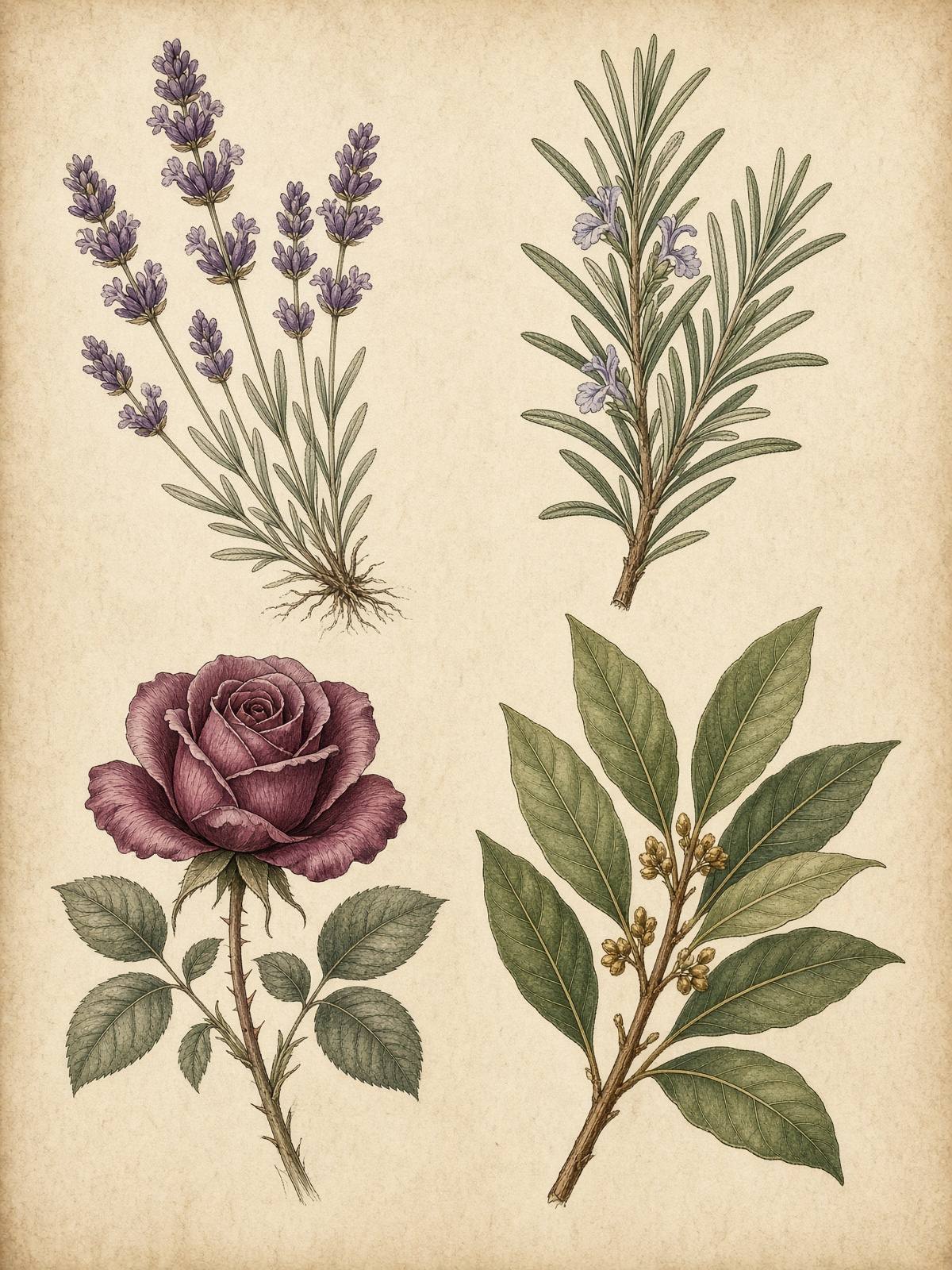
English ivy is an evergreen woody climber with dark, leathery leaves that are often three- to five-lobed on creeping stems and more oval on flowering shoots. Umbels of yellow-green flowers appear late, then black berries. The sap is sticky and can irritate. Aerial rootlets cling to walls and bark. This description is not a sufficient identification key.
Names
| Common name | Ivy |
| Botanical name | Hedera helix |
| Family | Araliaceae |
| Also called | English ivy, common ivy, bindwood |
| Uncertainty | Ground ivy (Glechoma hederacea) is a mint, not Hedera, and several Hedera species and cultivars are sold as ivy. |
| Habitat and source | Hedera helix is native to much of Europe and western Asia, in woods and on walls, and it is a serious invasive in parts of North America and elsewhere, where it carpets forest floors and climbs trees. Do not plant it in those regions, and do not dump cuttings in the woods. |
Symbolic correspondences
| Tag | Attribution |
|---|---|
| Element | Water |
| Planet | Saturn |
| Themes | the cling and the cut · evergreen persistence · a wall that is not a person · what you stop carrying |
Folklore and history
Ivy has a classical mythic life with Dionysus, whose cup and whose frenzy are sometimes wreathed in it, and a later English life in the holly-and-ivy carol, where it is paired, contrasted, and moralized. Those are myth and song. Ground ivy in Culpeper is a different plant, Glechoma, and must not be used to launder Hedera's chemistry. Grieve discusses English ivy with a caution that already sounds like a warning label: the berries are troublesome, the leaves are not a salad. Modern toxicology agrees and adds the sap. Falcarinol and related compounds irritate skin; triterpenoid saponins make the berries and leaves poisonous to eat.
Saturn is the correspondence this page uses for a cold evergreen that clings and lasts, a later herbal-magic attribution rather than a line we will fake from Culpeper's Hedera chapter. Contemporary workings that bind a lover with ivy are refused here. The Wilde Altar cuts a sprig only to picture a cling you are ready to end in your own life. Invasive ivy does not get a romantic second planting.
Safety
Ritual applications
- A glove-cut sprig, handled once, as a symbol of a cling you will stop feeding
- A living invasive patch you commit to removing by ordinary labor, not decorating
- A spoken release of a habit, with the plant bagged afterward
An original working
What I Stop Carrying
To name one attachment you are ready to loosen, without binding another person or spreading a toxic vine.
Timing: Any quiet hour, not in a wild place where dropped fragments can root
- Material: Gloves
- Material: A short ivy sprig already cut, or a drawing if cutting would spread the plant
- Material: A sturdy bag
- Material: Soap
- Material: Paper and a pen
- 1Put on gloves. If the ivy is a woodland invasive, do not carry a fresh sprig home as a charm; draw it, and continue the working with paper.
- 2Write what you are clinging to past the point of care. Make sure it is yours to set down, not a person you mean to control.
- 3Hold the bagged sprig or the drawing. Read the sentence. You are not cursing anyone.
- 4Put the sprig in the bag and seal it. Wash your hands and the gloves with soap. Do not touch your face first.
- 5Recycle the paper when the sentence has been acted on, or keep it in a book if you need the reminder.
- 6Dispose of the bagged ivy in trash, not in open compost and not in a park.
Ivy, you cling, and I have clung. I cut the habit, not a person. What I carry after this, I choose again on purpose.
Close. Bag every fragment for the trash. Do not compost ivy where pets dig, do not burn it, and do not pour sap or any soak outdoors. Wash skin that touched sap. The working ends when the bag is sealed and your hands are clean.
A practical action. Take one real step to loosen the cling: unsubscribe, return the key, or block one hour on the calendar for the life that is not the habit.
Substitutions
- A drawing of a vine and an empty bag, often the better choice
- A length of cotton string you tie and then cut, with no plant, if ivy is unsafe to handle
Growing and sourcing
Do not plant English ivy where it is invasive, including much of North America. On a wall you truly want covered, remember it can damage mortar and hide damp, and berries feed spread into neighboring trees.
Beginner questions
- Can I drink ivy tea or burn ivy to cleanse a room? No. Hedera is toxic, the sap irritates, and the smoke is not casual incense.
- Is ivy safe around pets? No. Leaves and berries can poison cats, dogs, and other animals.
- Is ground ivy the same as English ivy? No. Ground ivy is Glechoma, a mint, and this entry is Hedera helix.