Herb cabinet
Catnip
Nepeta cataria. A symbolic and practical entry, not a medical monograph.
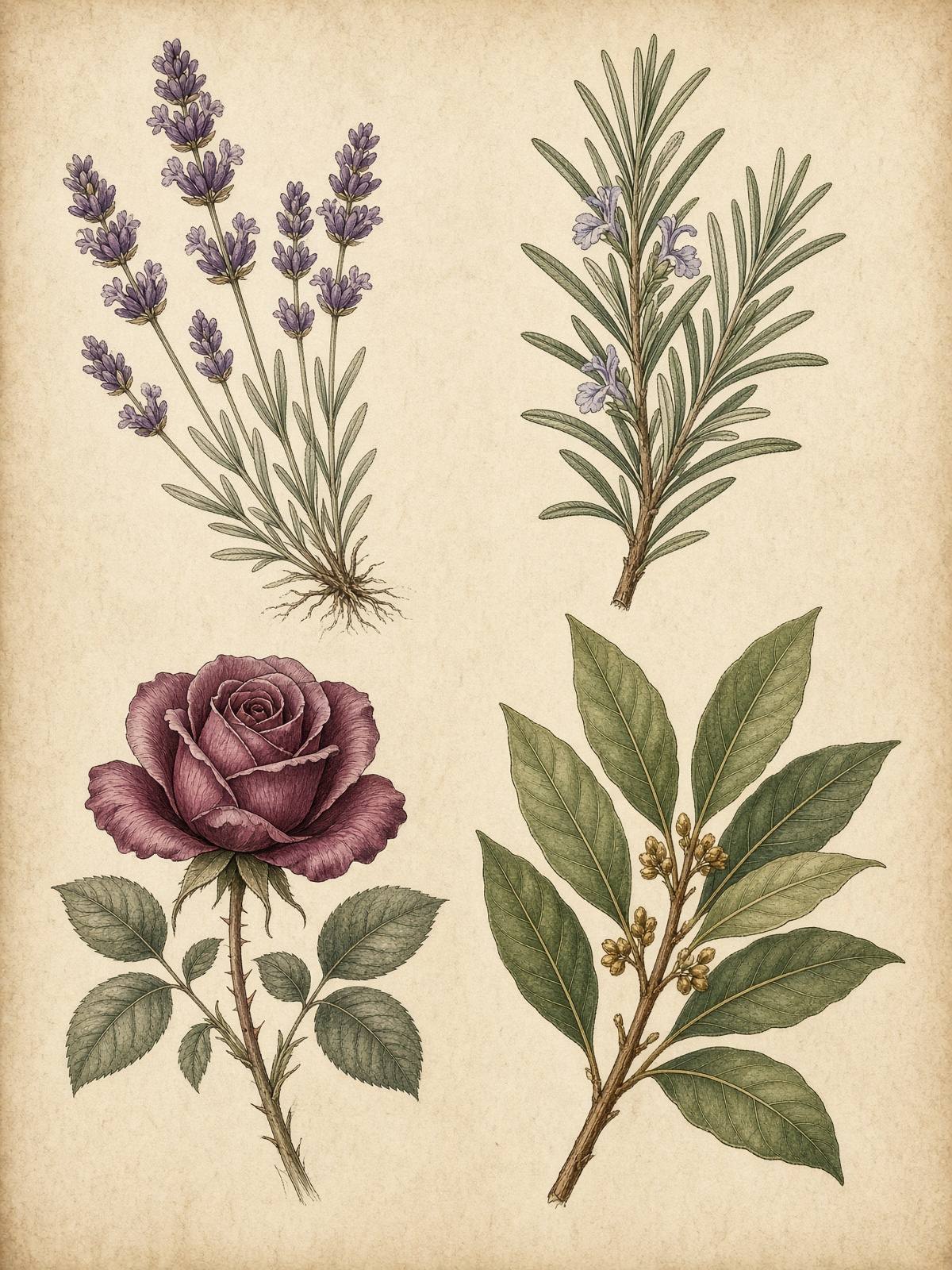
Catnip is a gray-green perennial mint with square stems, opposite heart-shaped leaves with scalloped edges, and a soft down that makes the foliage look dusty. Flower spikes carry small white to pale lavender lipped flowers with purple spots. Crushed leaves smell green, sharp, and a little skunky-mint. This description is not a sufficient identification key.
Names
| Common name | Catnip |
| Botanical name | Nepeta cataria |
| Family | Lamiaceae |
| Also called | catmint, field balm, catwort |
| Uncertainty | Ornamental catmints such as Nepeta x faassenii are not the same plant as Nepeta cataria, and essential oil is not the same as dried leaf. |
| Habitat and source | Nepeta cataria is native to Europe and western Asia and is widely naturalized in North America along roadsides and in gardens. Buy dried leaf from a clear label, or grow your own, rather than stripping wild stands that may have been sprayed. |
Symbolic correspondences
| Tag | Attribution |
|---|---|
| Element | Water |
| Planet | Venus |
| Themes | play that can stop · the willing cat · soft nerve · a toy, not a dose |
Folklore and history
Catnip's fame is behavioral and well documented: many cats, and some other felids, respond to nepetalactone in the leaf with rolling, cheek-rubbing, and a short burst of play. The response is genetic; a large minority of cats do not care. That is ethology, not witchcraft. European herbalists also wrote about Nepeta as a household mint. Culpeper discusses nep in the old astrological scheme under Venus, and Grieve repeats the cat stories alongside human kitchen uses. Neither author is a veterinarian.
Modern spiritual writing sometimes offers catnip as a love herb, a trance herb, or a bond-maker between witch and familiar. The love part is a contemporary attribution. The bond part is only decent if the cat is free to leave the room. There is no ancient queer cat-rite hidden here, and there is nothing holy about dosing an animal with essential oil. The Wilde Altar's use is play and rest: a toy if your cat already likes the leaf, a potted plant if they do not, and no medical claims for either species.
Safety
Ritual applications
- A pinch of dried leaf sewn into a cloth toy for a cat who already likes catnip
- A living plant on a shelf as a household green, not a pharmacy
- A pause to end play and offer water, as a ritual of stopping
An original working
A Toy, Not a Treatment
To offer play to a willing cat, or a moment of softness to yourself if no cat is present, without any medical claim.
Timing: Any quiet hour when play will not scare a sick or elderly animal; skip if your veterinarian has said your cat should avoid excitement
- Material: A teaspoon of dried Nepeta cataria leaf, not oil
- Material: A scrap of plain cotton and thread, or a clean sock
- Material: A bowl of fresh water for the cat, or a glass for you if you live alone
- Material: A timer
- Material: A bin for compost
- 1If you have a cat, confirm they have liked catnip before. If they have never tried it, offer a single leaf's worth and watch, or skip the leaf and simply sit with them.
- 2Sew or tie the dried leaf into the cloth so they cannot inhale loose dust in clouds. Do not add oil.
- 3Set down fresh water. Offer the toy. Start the timer for ten minutes.
- 4If the cat plays, let them. If they walk away, do not follow them with the toy.
- 5When the timer ends, put the toy away so the pleasure stays special and the household can settle.
- 6Compost loose leaf. Wash your hands. If no cat lives with you, skip the toy, hold the jar, wish the neighborhood cats well, and compost a pinch.
Soft mint, this is play, and play may end. I will not call a toy a cure. Whoever shares this room may leave it still themselves.
Close. Store the toy with the cat's things, not on a food plate. Compost loose leaf. Never pour oil down the sink as an offering or onto the garden. The working ends when play is put away.
A practical action. Refill the water bowl, scoop the box, or book the vet appointment you have been delaying. Care is not a scent.
Substitutions
- A plain ribbon or paper ball, if your cat does not respond to catnip or you have no leaf
- A pot of ordinary mint grown for the kitchen, admired and not given to the cat, if catnip itself is unavailable
Growing and sourcing
Catnip grows easily in sun and average soil and can self-seed generously; deadhead it if you do not want a minty thicket. It is weedy rather than a listed ecological menace in most places, but do not dump seed into natural prairies.
Beginner questions
- Does catnip treat my cat's illness? No. It is a play stimulus for many cats, not a medicine.
- Can I use catnip essential oil on my cat? No. The oil is much stronger than dried leaf and can harm pets.
- Do all cats respond? No. The reaction is hereditary, and a cat who walks away should be allowed to walk away.